Deep Teeth Cleaning in Glendale, AZ: Scaling and Root Planing Explained
When gum disease progresses beyond what a routine cleaning can address, a more thorough intervention is required. At A & A Family Dentistry, deep teeth cleaning in Glendale, AZ, also known as scaling and root planing, is the cornerstone non-surgical treatment for periodontal disease. This procedure goes well below the gumline to remove the bacterial deposits, tartar, and infected tissue that cause the destruction of your gum tissue and jawbone. It is the most effective first step in stopping gum disease from advancing and is often the deciding factor between saving and losing teeth. If you have been told you may need a deep cleaning, or if you are noticing signs of gum disease, contact our Glendale office to schedule an evaluation with Dr. Ardalan.
What Is Deep Teeth Cleaning (Scaling and Root Planing)?
Scaling and root planing is a two-part non-surgical procedure designed to treat gum disease by removing the bacterial plaque, calculus (tartar), and infected root surface material that have accumulated below the gumline. Unlike a routine prophylaxis cleaning, which focuses on the visible surfaces of teeth, scaling and root planing targets the root surfaces within the periodontal pockets where everyday brushing and flossing simply cannot reach.
According to the American Academy of Periodontology, scaling and root planing is recommended when periodontal pockets measure 4mm or deeper, when there is evidence of bone loss, or when clinical signs of active infection are present. It is commonly used for gingivitis that has not responded to routine care and for moderate to severe periodontitis.
The procedure may be completed in one appointment or divided into multiple visits treating one quadrant of the mouth at a time, depending on the extent of disease present. Local anesthesia is used to keep you comfortable throughout.
Who Needs a Deep Teeth Cleaning in Glendale, AZ?
Not every patient needs scaling and root planing, but the signs that indicate it is necessary are often subtle until the disease is already well advanced. Our team measures your periodontal pocket depths at every exam and uses that data, along with X-rays and visual assessment, to determine whether a deep cleaning is indicated.
Common Signs You May Need a Deep Teeth Cleaning
- Gums that bleed consistently when you brush or floss
- Red, swollen, or tender gum tissue
- Gums that have pulled away from the teeth, making them appear longer
- Persistent bad breath that does not resolve with brushing
- Teeth that feel loose or have shifted position
- Periodontal pockets measuring 4mm or deeper at one or more sites
- Visible buildup of tartar below the gumline detected on X-ray
- A previous diagnosis of gum disease that has not been professionally treated
Many patients with early to moderate gum disease have no noticeable symptoms at all, which is why regular professional checkups are so important. Catching disease early means less invasive treatment and a much better long-term prognosis.
The Deep Cleaning Procedure: Scaling and Root Planing Step by Step
Before recommending scaling and root planing, we perform a thorough examination of the mouth that includes X-rays, pocket depth measurements, and visual assessment of the gum tissue. Once the need for treatment is confirmed, here is what the procedure involves:
Scaling
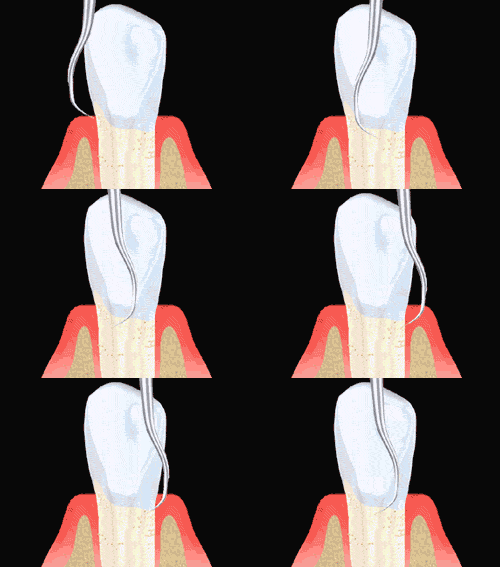
Scaling is the first phase of treatment. Using an ultrasonic scaling tool and hand instruments, your hygienist carefully removes calculus and bacterial plaque from all tooth surfaces, with particular focus on the areas below the gumline along the root. The ultrasonic scaler uses high-frequency vibrations to break apart stubborn deposits while a built-in irrigation system delivers an antimicrobial agent into the pocket, reducing the bacterial population directly at the site of infection. Every surface of every affected root is systematically cleaned to ensure no deposits are left behind.
Root Planing
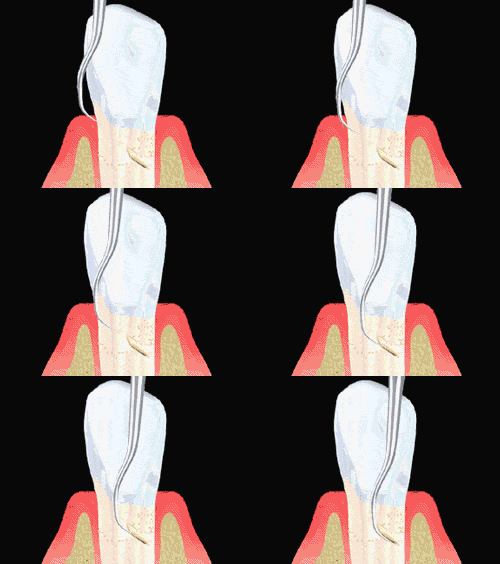
Root planing follows scaling and addresses the root surface itself. Periodontal disease embeds bacterial toxins and microorganisms into the cementum and surface dentin of the root. Root planing removes this contaminated material and smooths the root surface to a clean, hard finish. A smooth root surface is critical because it promotes healthy reattachment of the gum tissue and makes it significantly more difficult for bacteria to colonize the area again in the future. This smoothing process is one of the key reasons scaling and root planing produces better long-term results than scaling alone.
Adjunctive Therapies Used Alongside Deep Cleaning
Scaling and root planing is highly effective on its own, but combining it with targeted antimicrobial therapy produces measurably better outcomes at specific sites. After completing the mechanical cleaning, our team may recommend one or more of the following:
- Arestin (minocycline) antibiotic therapy: Biodegradable microspheres placed directly into the periodontal pocket immediately after scaling and root planing. Arestin releases antibiotic medication at the infection site for up to 30 days and has been shown to produce significantly better pocket reduction than scaling and root planing alone for up to 90 days.
- Antimicrobial irrigation: An antimicrobial solution delivered below the gumline during scaling to reduce the bacterial load throughout the pocket at the time of treatment.
- Antibiotic fibers: In some cases, antibiotic-impregnated fibers may be placed within specific pockets to maintain antimicrobial activity during the healing period.
The decision to use adjunctive therapy is made based on your specific clinical findings, pocket depths, and response to previous treatment. We discuss all recommendations with you before proceeding so you fully understand your treatment plan and options.
Deep Cleaning vs. Regular Cleaning: Understanding the Difference
| Feature | Regular Cleaning (Prophylaxis) | Deep Cleaning (Scaling and Root Planing) |
|---|---|---|
| Purpose | Maintain healthy gums; prevent disease | Treat active gum disease; remove infection below gumline |
| Area treated | Tooth surfaces above and just at the gumline | Root surfaces deep within periodontal pockets |
| Anesthesia | Not typically needed | Local anesthesia commonly used |
| Number of visits | One appointment | One to four appointments depending on disease extent |
| Follow-up care | Routine six-month recall | Periodontal maintenance every three to four months |
| Who it is for | Patients with healthy gums or early gingivitis | Patients with gum disease and pocket depths of 4mm or greater |
What to Expect After Your Deep Cleaning
Some sensitivity and mild soreness in the gum tissue is normal in the days following scaling and root planing. This is a natural response to the deep cleaning process and typically resolves within a few days to a week. Here is what to keep in mind during recovery:
- Take over-the-counter pain relievers as needed to manage any post-procedure discomfort
- Rinse with warm salt water two to three times daily to reduce inflammation and promote healing
- Brush gently around the treated areas; do not avoid brushing as this allows bacteria to accumulate
- Avoid very hot, very cold, or very hard foods for the first few days
- If Arestin was placed, avoid flossing the treated sites for 10 days and follow all aftercare instructions provided at your appointment
- Contact our office if you experience significant swelling, bleeding that does not subside, or any other concern
Within four to eight weeks of your deep cleaning, we schedule a re-evaluation appointment to measure your pocket depths, assess gum tissue healing, and determine whether the disease has been brought under adequate control. Patients who respond well to initial scaling and root planing are transitioned to a periodontal maintenance schedule to keep the disease stable long-term.
The Benefits of Treating Gum Disease Early
The earlier periodontal disease is treated, the more conservative the intervention required and the better the outcome. Scaling and root planing performed on mild to moderate disease consistently produces excellent results, with many patients achieving significant pocket reduction and gum tissue reattachment after a single course of treatment.
Beyond protecting the teeth themselves, treating gum disease has meaningful benefits for overall health. Research has established associations between untreated periodontal infection and elevated risk of heart disease, diabetes complications, respiratory illness, and adverse pregnancy outcomes. Removing the bacterial source of infection through deep cleaning addresses these systemic risks as well.
Patients who delay treatment risk allowing pockets to deepen to a point where non-surgical treatment is no longer sufficient. When pockets become too deep for instruments to reach effectively, surgical intervention may become necessary to restore periodontal health. Treating the disease at the scaling and root planing stage avoids this outcome for the majority of patients.
When Deep Cleaning Alone Is Not Enough
In cases of severe periodontitis where pockets are very deep and bone loss is significant, scaling and root planing may not be able to fully eliminate the infection or allow adequate tissue healing. In these situations, referral for periodontal surgery may be recommended to provide direct access to root surfaces and bone for more complete treatment.
Patients who have experienced significant tooth loss as a result of gum disease may also need to discuss restorative options such as dental implants or bridges to restore function and prevent further bone deterioration from missing teeth. Our team will discuss all options with you openly and help you develop a plan that addresses both the disease and its consequences.
For a complete overview of how we diagnose and manage gum disease from beginning to long-term maintenance, visit our gum disease treatment page or browse our full range of preventative care services. To schedule your evaluation or ask questions about the procedure, contact our Glendale team or explore our new patient specials.
Call 623-218-2222 to schedule your deep cleaning evaluation at A & A Family Dentistry in Glendale, AZ.
Frequently Asked Questions About Deep Teeth Cleaning in Glendale, AZ
Does a deep teeth cleaning hurt?
Local anesthesia is used during scaling and root planing so you should not feel pain during the procedure itself. Some tenderness and sensitivity in the gum tissue is normal in the days following treatment and typically resolves within a week. Over-the-counter pain relievers and warm salt water rinses help manage post-procedure discomfort effectively for most patients.
How long does a deep cleaning take?
The length of your appointment depends on the extent of disease present. Many patients complete the entire mouth in one to two visits. Others may have treatment divided into quadrants across two to four appointments to allow the anesthesia to be more targeted and recovery to be more manageable. Your treatment plan will be outlined before you begin.
How many times do I need a deep cleaning?
Most patients need one initial course of scaling and root planing to bring active disease under control. After that, they transition to periodontal maintenance visits every three to four months. At those maintenance visits, deep cleaning of specific sites may be performed again if those areas show signs of reactivation.
What is the difference between deep cleaning and regular cleaning?
A regular cleaning (prophylaxis) removes plaque and tartar from tooth surfaces at and above the gumline and is designed for patients with healthy gums. A deep cleaning (scaling and root planing) extends below the gumline into the periodontal pockets to remove bacterial deposits from the root surfaces and treat active gum disease. Local anesthesia is used for deep cleaning but not typically for routine prophylaxis.
Will my gums recede after scaling and root planing?
In many cases, gum tissue that appeared receded was actually swollen and inflamed. As the infection resolves and inflammation subsides after treatment, the tissue firms up and may appear to have receded slightly. This is a normal and healthy response, not further recession. True gum recession caused by bone loss is a pre-existing condition that treatment helps stabilize rather than reverse.
What happens if I do not get a deep cleaning when my dentist recommends it?
Delaying or refusing scaling and root planing when it is clinically indicated allows the bacterial infection to continue destroying the bone and connective tissue that hold your teeth in place. Over time, pockets deepen beyond what can be treated non-surgically, and teeth can become mobile and eventually need to be extracted. The longer treatment is delayed, the more limited the options become.
Does insurance cover deep teeth cleaning?
Most dental insurance plans provide coverage for scaling and root planing (billing codes D4341 and D4342) as a periodontal benefit, separate from standard cleaning benefits. Coverage levels vary by plan. Our team verifies your benefits before treatment and will review your out-of-pocket responsibility in advance. Visit our insurance information page for more details.

