How Sedation Dentistry Works and Which Option Fits You

Learn how sedation dentistry works, which sedation options are available, how patients are carefully monitored for safety, and what to expect before and after a visit. For anyone who feels anxious about the dentist, sedation can make comfortable, relaxed care possible, even for lengthy or complex treatment that might otherwise feel overwhelming or stressful for you.
Understanding how sedation dentistry works removes much of the mystery that keeps people away from the dental chair. Many patients delay or skip necessary care because of nervousness, unpleasant past experiences, a strong gag reflex, or trouble sitting still for long appointments. Sedation eases those concerns by creating a calm, controlled setting, so essential treatment can be completed without fear or discomfort. It also supports better long-term oral health, because patients who feel relaxed are far more likely to keep up with routine care.
What Is Sedation Dentistry and Why Do Patients Choose It?
Sedation dentistry is the use of medication to help patients relax during dental procedures. It is sometimes called sleep dentistry, but most levels of sedation leave patients awake and responsive while feeling deeply at ease. Only the deepest form, general anesthesia, puts a patient fully to sleep. Sedation is typically paired with a local anesthetic, which numbs the treatment area, so the two work together to keep you calm and comfortable.
Common Reasons Patients Choose Sedation
People ask for sedation for many different reasons, and none of them are unusual. Some of the most common include:
- Dental anxiety or fear, which affects both children and adults
- Painful or uncomfortable experiences in the past
- Heightened sensitivity to sounds, sensations, or the atmosphere of a dental office
- A strong gag reflex
- Difficulty sitting still for extended periods
- Medical conditions that make standard dental visits challenging
- Extensive treatment that is better completed in fewer, longer visits
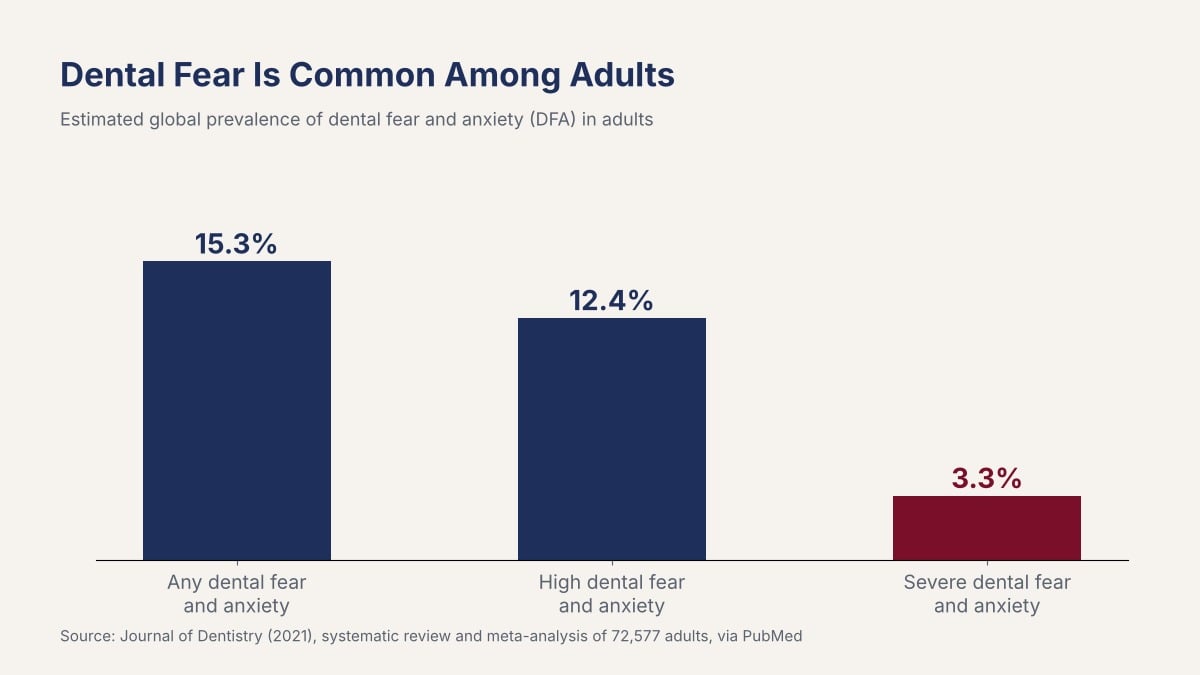
If worry is the main obstacle, you are in large company. Research that pooled data from more than 72,000 adults found that roughly 15 percent experience some level of dental fear and anxiety, and about 12 percent experience a high level.
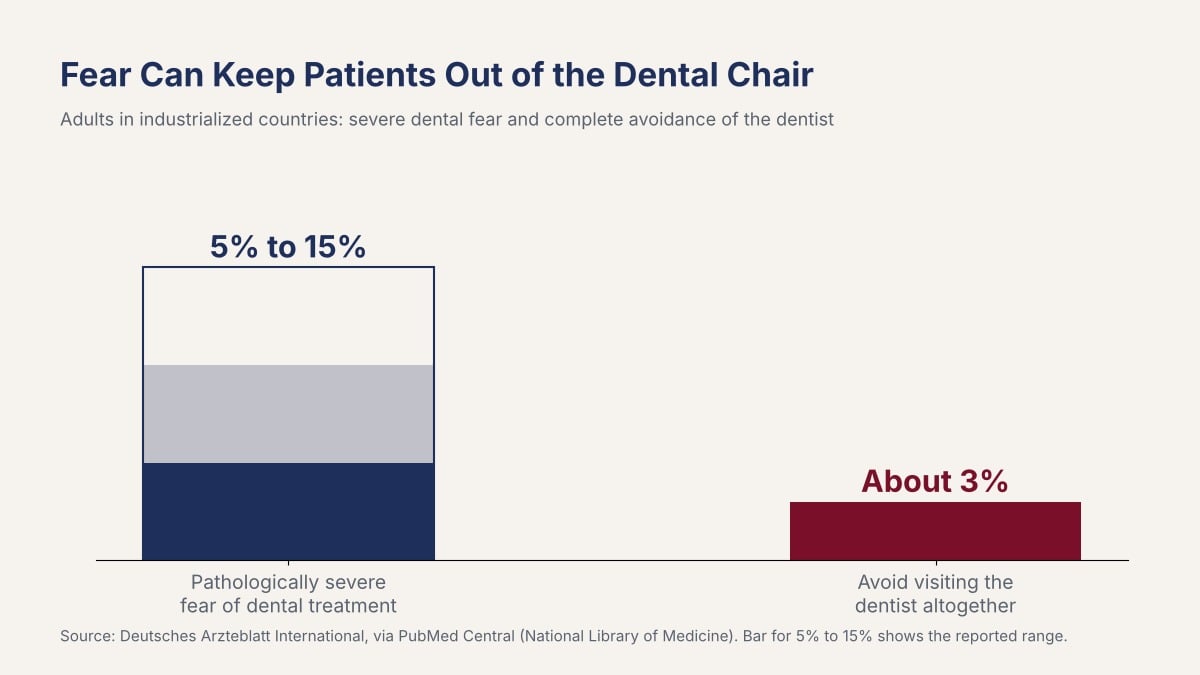
Fear also has real consequences. Studies indexed by the National Library of Medicine report that people with significant dental fear often put off appointments until they are in pain, and that a small share avoid the dentist entirely. Postponing care allows small problems to grow into larger ones, which can make the next visit even more daunting. Sedation helps break that cycle. For patients who want to understand the emotional side of the issue, there is dedicated support for fear of the dentist.
Common Sedation Dentistry Methods Explained
The right option depends on your comfort level, your health history, the length and complexity of the procedure, and your dentist’s guidance. Not every office offers every level, so it is worth asking what is available. The table below compares the main approaches at a glance.
| Method | How It Is Given | Typical Awareness | Ride Home Needed? | Often Used For |
|---|---|---|---|---|
| Nitrous oxide | Inhaled through a small nose mask | Awake, light and calm | Usually not | Mild anxiety, routine care |
| Oral sedation | Medication in pill form before the visit | Awake, mildly to deeply relaxed | Yes | Moderate anxiety, longer visits |
| IV sedation | Medication delivered through a vein | Deeply relaxed, often little memory | Yes | Significant anxiety, complex treatment |
| General anesthesia | Delivered with continuous monitoring | Fully asleep | Yes | Complex surgery, special medical needs |
Nitrous Oxide
Often called laughing gas, nitrous oxide is one of the most widely used forms of sedation. You breathe it through a small mask over the nose and within minutes feel calm, light, and at ease. Because it wears off quickly once the mask is removed, many patients can return to normal activities soon after their appointment. A laughing gas option is a good starting point for patients with mild nervousness.
Oral Sedation
With oral sedation, you take a prescribed pill before the procedure. Depending on the dose, you may feel mildly relaxed or deeply calm, and many people stay awake but notice far less of what is happening around them. Because it can affect coordination and alertness for several hours, you will need someone to drive you home. Learn more about pill-based sedation and what the experience is like.
IV Sedation
IV sedation is delivered through a vein, which allows the dental team to adjust the depth of sedation as needed during the visit. Patients often remember little or nothing of the procedure afterward. It is especially helpful for longer appointments and for people with significant anxiety. You can read how sedation delivered through a vein is planned and monitored.
General Anesthesia
General anesthesia is reserved for specific situations, such as complex oral surgery or patients with special medical needs. The patient is completely asleep and closely monitored at all times. It is not needed for routine dental care, but it remains an important option when deeper sedation is medically appropriate. It is often arranged with a specialist or in a surgical setting.
How Sedation Dentistry Works From Start to Finish
A well-run sedation visit follows a clear sequence designed around safety and comfort. Each stage is simple, and your dental team explains every step so there are no surprises.
How Sedation Dentistry Works During a Dental Procedure
Once your sedation plan is in place, the appointment moves through a predictable series of stages.
Screening and Planning
Before any medication is given, the team reviews your medical history, current medications, allergies, and health concerns. This personalized review determines which type and level of sedation is the safest and most effective choice for you. You will also receive specific instructions to follow before the visit.
Monitoring During Treatment
As the sedation takes effect, you gradually relax while staying under careful supervision. Monitoring equipment tracks vital signs such as heart rate, oxygen level, and blood pressure so that your condition remains stable throughout the appointment. The team stays in communication with you and attentive to your comfort the entire time.
Comfort While the Work Is Done
Sedation reduces the sensations that often trigger anxiety. Patients may feel pressure but rarely pain, especially because sedation is combined with local anesthetic. A relaxed state also lowers muscle tension, which can help the dentist work efficiently. Many people say the visit felt shorter than it was.
Because sedated patients can tolerate longer sessions without feeling overwhelmed, extensive treatment can often be completed in fewer appointments. Procedures such as treatment for an infected tooth, tooth replacement with implants, or removing a problem tooth are common examples where sedation makes a long visit far more manageable.
How Safe Is Sedation for Most Patients?
Sedation is widely considered safe when it is administered by trained professionals who follow established guidelines and screen patients carefully. Safety depends on three things: a thorough health evaluation, continuous monitoring, and a provider experienced with the technique you choose.
Pre-Visit Health Screening
Before recommending sedation, your dentist evaluates your medical background to identify any potential risks. Be ready to share the following:
- All prescription medications, over-the-counter products, and supplements you take
- Any allergies
- Past reactions to sedation or anesthesia
- Existing health conditions, including breathing, heart, or sleep concerns
- Whether you might be pregnant
Continuous Monitoring and Preparedness
Throughout the procedure, the team tracks your vital signs so sedation stays at a controlled, predictable level. Modern monitoring equipment makes it possible to respond right away to any change. For most healthy patients, and for many with mild medical conditions, sedation is a safe and effective choice. Your dentist will tell you honestly if a different approach is better suited to your situation.
What to Expect Before and After Sedation
Knowing what will happen helps you feel prepared and confident. The experience is meant to be straightforward and reassuring.
Before Your Appointment
Your dental team gives detailed instructions based on the type of sedation. Depending on the method, they may ask you to adjust eating and drinking, arrange transportation, or change when you take certain medications. Following these instructions closely is one of the most important things you can do for a smooth, safe visit. If you are new to the office, learn what happens at a first appointment so the day feels familiar.
During and Right After the Visit
Your team explains each step as it happens. After treatment, the recovery experience depends on the method used:
- Nitrous oxide: effects fade quickly after the mask is removed.
- Oral sedation: a longer rest period is usually needed, along with a ride home.
- IV sedation: you are typically taken to a quiet area until initial grogginess passes, then released to a responsible adult.
You will also receive written aftercare instructions to support comfort and healing.
Recovery Tips After Sedation
Recovery is generally smooth, especially if you follow your dentist’s recommendations. A few simple habits make the rest of the day easier:
- Rest for the remainder of the day, particularly after oral or IV sedation.
- Avoid driving, operating machinery, or making major decisions until your dentist says it is safe.
- Drink water and start with light meals once you feel ready.
- Follow all guidance on pain management and care of the treated area.
- Expect mild effects such as grogginess, dry mouth, or temporary changes in coordination, which usually fade within several hours.
If stitches or surgery were part of the visit, your team will give specific healing instructions. Call the office if you notice unusual symptoms or have questions about your recovery. Open communication is part of safe care.
Who May Benefit Most From Sedation
Sedation is not only for people with intense fear. It can be a practical tool for many situations:
- Patients who have avoided care for years and need significant work
- People who need several procedures completed efficiently
- Patients with a sensitive gag reflex or trouble staying still
- Individuals who simply want a calmer experience
Younger patients may be treated differently, and the approach depends on age and needs. Families can explore gentle care for kids to see how comfort is handled for children. Even patients who only need maintenance can ask about options for routine cleanings and exams, since regular visits are the foundation of a healthy mouth. For a full overview of what is available, review the relaxation options for dental visits.
Stress-Free Dental Care at A & A Family Dentistry
Sedation offers an effective solution for patients who experience anxiety, discomfort, or fear at the dentist. By providing a calm and controlled environment, it helps people get the care they need while feeling safe. A & A Family Dentistry provides general, cosmetic, and restorative care for patients of all ages, including porcelain veneers, dental implants, crowns, and bridges. Dr. Ardalan is committed to delivering a high level of care with comfort and precision. If you are ready to take the next step, reach out to our team to talk through your options.
Frequently Asked Questions About Sedation Dentistry
Will I be asleep during sedation dentistry?
Usually not. Nitrous oxide, oral sedation, and most IV sedation leave you awake but deeply relaxed, and some patients remember little afterward. Only general anesthesia puts you fully to sleep.
Is sedation dentistry safe?
It is widely considered safe when given by trained professionals who review your medical history, follow established guidelines, and monitor your vital signs throughout the appointment.
Will I feel pain during treatment?
Most patients feel pressure but little or no pain. Sedation is commonly combined with a local anesthetic that numbs the treatment area.
Do I need someone to drive me home?
For oral sedation, IV sedation, and general anesthesia, yes. These methods affect alertness and coordination for several hours. Nitrous oxide wears off quickly, but follow your dentist’s instructions.
How long does it take to recover from sedation?
Nitrous oxide fades within a short time after the mask is removed. Oral and IV sedation usually call for a longer rest period, and mild grogginess typically fades within several hours.
Can sedation help with long or complex procedures?
Yes. Because you stay relaxed, longer appointments feel more manageable, and extensive work can often be completed in fewer visits.
Is sedation only for people with severe dental anxiety?
No. Patients also choose it for a strong gag reflex, difficulty sitting still, sensitivity to sounds and sensations, or simply to feel more comfortable during longer treatment.

